
Officers across departments and ministries have been asked to speak to people across sectors for 'SWOT' analysis of issues for revival of the economy.
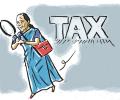
Direct tax collections missed the revised target for 2019-20 by Rs 1.42 trillion at Rs 10.27 trillion, an 8 per cent fall over the previous year.

'We will not compromise on it. We will not make any deferred payments or cuts.'
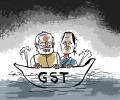
Even with the Rs 20,000 crore distributed among states, it will still be a fraction of what they have been demanding in financial support and clearance of pending dues.

This brings its tax treatment on par with the Prime Minister's National Relief Fund.

India doesn't have a data protection law or a dedicated law on cybersecurity. Also, there is no specialised law on privacy. Experts say this complicates the scenario for businesses as they continue to be liable for breach in client data even when employees work out of the home.
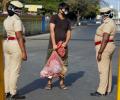
'It is unclear whether clothing or home items qualify as essential items. A lot of professionals are working from home, and they need electronics for their productivity. Does this qualify as essential?'

To address the supply crunch, CII has suggested leveraging the existing excess capacity in the Indian industry; rolling back import duty hike to look for alternative sources of imports; expanding credit to manufacturing units with quick loan sanctions, and one-time emergency waiver of non-performing asset regulations for three months.

Tax experts say one of the most dispute-prone proposals is making "fraudulent availing" of input tax credit (ITC), without an invoice or bill, a cognizable and non-bailable offence.

The scheme offers waiver of interest, penalty, and prosecution for settling tax disputes.
'If you do quick back-of-the-envelope calculation, someone earning Rs 10 lakh can get a benefit of anywhere between Rs 35,000 and Rs 45,000, even if s/he is availing exemptions.' 'A large proportion of people do not avail full exemptions as they don't have money to invest in those schemes.'
India is often viewed as an aggressive tax jurisdiction by domestic and overseas taxpayers, and making the charter as part of the Act may help restore confidence among taxpayers.
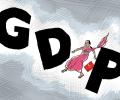
'There are some encouraging signs.' 'Notice that we have not said 7%-plus, we are keeping it at 6% to 6.5%.'

The bulk of states' revenue comes from the devolution from the Centre's divisible tax pool, GST, VAT on petroleum, and excise duty on alcohol.

DDT is levied on dividends that a company pays its shareholders out of its profits. It is currently charged at the rate of 20.55 per cent, including a surcharge and education cess. Government may instead tax the shareholders receiving dividends, in a bid to help improve investor sentiment by addressing the multiplicity of taxes and bring down the effective tax rates for companies.

A robust dispute settlement system would help the government unlock tax revenues, and also aid ease of doing business.

The instruction is that audit of large units be completed within seven working days, of medium units in five working days and of small ones in three.

In fact, India's investment activity growth is also estimated to touch a 17-year low in FY20. With overall demand not showing signs of revival, investment activity may take longer to recover, economists said.

The department notified ITR 1-Sahaj and ITR 4-Sugam in January against the usual practice of notifying returns in April, with disclosure requirements related to cash deposits, spending on foreign travel, and electricity. The notification of the returns followed Budget announcements making income-tax return filing mandatory for certain persons even if their income was below the taxable limit.

Sections in the draft Personal Data Protection Bill are a blatant violation of the Right to Privacy as guaranteed by the Constitution.
 © 2026 Rediff.com - Advertise with us - Disclaimer - Privacy Policy - Sitemap - Feedback - About us - Terms of use - Grievances